Product Description
Vibrating Machine
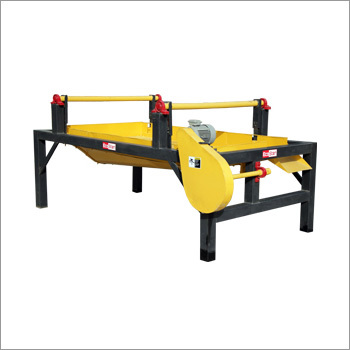
Vibrating Machine consists of wire netting which always Vibrates at the time of working. The raw material is screened as per the requirement of in-feed size and make material free from Iron nails etc. Screened material is transported to the machine with the help of conveyors.
Product Details:
| Minimum Order Quantity | 1 Piece |
| Model | EcoStan VIB1,EcoStan VIB2 |
| Max Weight | >1200 kg |
| Power | 1,2 Hp |
| Production Capacity | 1000,2000 Kg/hr |
Technical Specifications
| Model No. | Production | Power Requirements |
| VIB3 | 3,000 KG/H | 2 HP |
| VIB2 | 2,000 KG/H | 2 HP |
| VIB1 | 1,000 KG/H | 1 HP |
Precision in Laboratory CompactionDesigned for maximum accuracy, this vibrating machine ensures that cement mortar cubes and concrete specimens are compacted uniformly. Its adjustable amplitude mechanism allows for tailored vibration to meet specific testing standards, contributing significantly to reproducible results in research and routine laboratory analyses.
User-Friendly Operation and Robust BuildThe integrated control panel, featuring an on/off switch and timer, simplifies operation for lab technicians. With powder-coated mild steel construction and a compact table-top design, this machine is both durable and easy to fit into any laboratory setting. Low noise and straightforward maintenance further enhance its functionality.
FAQs of Vibrating Machine:
Q: How does the vibrating machine benefit civil engineering laboratories?
A: The vibrating machine provides consistent and reliable compaction of cement mortar and concrete specimens, yielding precise samples needed for accurate testing in civil engineering laboratories, research centers, and testing institutes.
Q: What is the process for operating the vibrating machine?
A: To use the machine, place your specimen on the adjustable vibration table, set the required amplitude (up to the standard 0.5 mm), and use the integrated control panel to start the vibration with the on/off switch and pre-set timer, ensuring uniform compaction every time.
Q: When should I adjust the amplitude, and why is it important?
A: Amplitude should be set according to the test standards or specimen requirements. Adjusting to the standard 0.5 mm amplitude ensures optimal compaction and compliance with laboratory protocols, which is crucial for reproducible and accurate results.
Q: Where can this vibrating machine be installed?
A: Thanks to its compact table-top mounting, the machine fits easily into laboratory spaces, research institutes, and testing facilities. Its dimensions (500 x 430 x 600 mm) allow for versatile placement on various work surfaces.
Q: What are the key specifications that enhance performance?
A: Important features include a 50 Hz frequency, a 380 mm x 260 mm vibration table, a capacity of 3 kg, powder-coated mild steel construction, and an integrated control panel with timerall contributing to user convenience, accuracy, and durability.
Q: How does the integrated control panel improve usage?
A: The control panel streamlines operation by incorporating an easy-to-use timer and on/off switch, giving operators direct control over vibration duration for precise sample compaction.





 Send Inquiry

 Send Inquiry
 Call Me Free
